


How Does Moving Affect Your Permanent Residency Application? Key Points & Risks [2025]
Introduction

The examination process for permanent residency in Japan usually takes several months to up to a year. During this long review period, it is not uncommon for applicants to move to a new residence. While relocation itself is not a direct reason for denial, it can create significant procedural risks if not handled properly—such as delays in notification, jurisdictional changes, missed correspondence, and requests for additional documents.
This article organizes what you need to do—when, where, and how—within the legal framework, and provides a step-by-step guide to minimize the impact of relocation on your application and on the review process.
Key Takeaways From This Article
- Mandatory relocation procedures, including the “14-day rule”
- What happens when jurisdiction changes, and the risk of delays
- Additional documents often requested after moving and how to prepare them
- Common mistakes to avoid and best practices for different scenarios
Mandatory Procedures After Moving (Where and When)
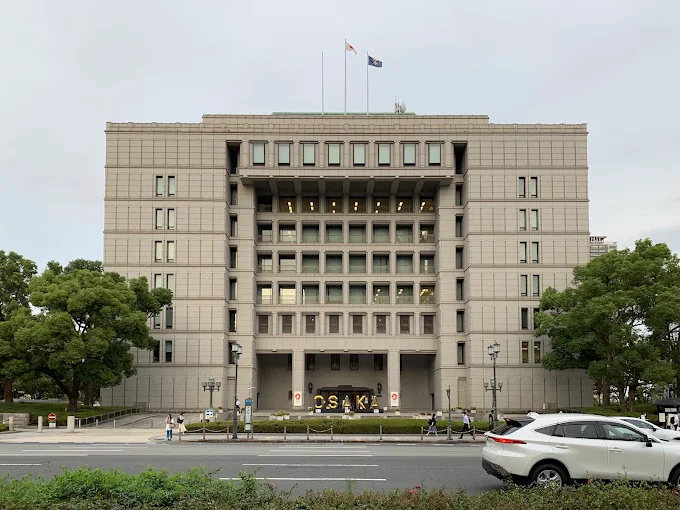
When you move, the first step is to complete your resident registration at the municipal office. For mid-to-long-term residents, an address change must be reported within 14 days of moving. This updates your residence record (jūminhyō) and the address on the back of your residence card at the municipal office. (In such cases, there is no need for a separate report to Immigration regarding the address itself.)
However, changes to other registered information—such as name, nationality, or affiliated institution (employer/school)—must still be reported to Immigration.
Additionally, if you are in the middle of a permanent residency application, you must promptly notify the Immigration office where you filed your application of your new address. Depending on the situation, your case may be transferred to the Immigration office that has jurisdiction over your new residence.
Basic Tasks After Moving
| Task | Deadline | Where to File | Key Points | Practical Notes |
|---|---|---|---|---|
| Address change (Resident record + address on back of Residence Card) | Within 14 days after moving | Municipal office | Address changes are completed at the municipal office. No separate Immigration filing required. | Bring your residence card, MyNumber card (optional), and valid ID when filing your moving-in notification. |
| Mail forwarding | As soon as possible | Japan Post | Prevents important notifications from being lost. | Note: Certain restricted mail (e.g., identity-confirmed mail) may not be forwarded. Always notify Immigration of your new address as well. |
| Notify Immigration of new address for PR application | Immediately after moving | Immigration office where you applied | Updates your contact information for the ongoing review. | Include your application number, name, date of birth, old and new addresses, and phone/email. |
| Report other changes (name, nationality, employer, etc.) | Within 14 days | Immigration office | Required for changes other than address. | Attach supporting evidence for changes (e.g., new employment contract, marriage certificate). |
Checklist
- Completed moving-in registration and updated residence card at municipal office
- Notified Immigration office of new address for PR application (by email, written notice, or at the counter)
- Filed mail forwarding request with Japan Post
- Reported other changes (name, nationality, employer, etc.) to Immigration if applicable
Impact on the Examination Process

Relocation itself is not a reason for denial. However, it can cause delays and additional scrutiny due to administrative processes and the need to re-confirm your stability.
- Jurisdiction change: If your new residence falls under a different Immigration office, case transfer may cause delays.
- Stability review: Moving often triggers additional checks on employment, household income, tax, and social insurance status.
- Missed correspondence: If important notices are sent to your old address, you risk missing deadlines or appointments.
- Document inconsistencies: If addresses differ between resident record, lease, payroll, and insurance documents, you may be asked to resubmit.
Typical Impacts and How to Reduce Risks
| Situation | Main Impact | Risk Mitigation |
|---|---|---|
| Jurisdiction change | Case transfer delays | Notify Immigration early, always include your application number, ensure both old and new offices have your contact info |
| Employer change | Additional stability check | Prepare updated employment certificate, recent payslips, and social insurance records |
| Missed correspondence | Missed deadlines, case closure | Mail forwarding + notifying Immigration of new address + provide email contact |
| Document inconsistencies | Resubmission or correction | Ensure all records (resident record, contracts, payroll, insurance) reflect the same address |
Jurisdiction Change: Practical Flow

If your new address falls under a different Immigration office, case transfer may occur. Depending on circumstances, either the original office continues the review or the new office takes over.
Expected flow:
- Move → Update address at municipal office (resident record + residence card)
- Notify the Immigration office where you applied (application number + new address)
- Immigration decides whether to transfer case
- If transferred: Case file sent to new office → Possible request for additional documents
- If not transferred: Original office continues review → May still verify your new living situation
- In all cases: Confirm communication routes and update contact info to avoid missed notices
Additional Documents Commonly Requested

When you move, Immigration often checks the stability and continuity of your living situation. If there are changes in housing, employment, household, or income, submit supporting documents.
| Reason | Main Documents | Supporting Materials / Tips |
|---|---|---|
| Address change | Resident record (full household, with relationship details) | Lease contract, mortgage papers, utility bills at new address |
| Employer change | Employment certificate, contract, appointment letter | Recent payslips, social insurance certificate, unemployment insurance card |
| Family structure change | Marriage or birth certificate | Evidence of household/family support, school enrollment proof |
| Income/tax confirmation | Withholding slip, tax certificate | Tax payment certificate, pension contribution record, bank deposit history |
Additional Notes (Common Situations)
- Temporary housing: If your move is only to a short-term residence (e.g., due to a job transfer or while waiting for a permanent home), submit a written explanation of your final intended place of settlement.
- Significant rent increase or decrease: To show that your household finances remain stable, supplement with evidence such as take-home income, savings, or financial support from family.
- From living together to living separately: Clarify how household expenses and financial support are divided, for example by preparing a household budget table.
Best Practices for Different Scenarios

The optimal approach depends on your circumstances.
- Moving within the same municipality
Lower impact, but still update residence record and notify Immigration. Prevent missed correspondence above all. - Moving to another prefecture (jurisdiction likely to change)
Notify Immigration immediately. Prepare employment, income, and housing documents in advance. Use mail forwarding and email contacts. - Moving just before filing PR application
Ideally wait until after moving so documents match your new address. If urgent, submit a relocation plan (move date, housing details, employment stability). - Moving just after PR approval
Still update municipal records and residence card. Update banks, employer, insurance, and driver’s license promptly to avoid inconsistencies. - Moving abroad temporarily while relocating
Highest risk of missed correspondence. Check proxy receipt options and email communication with Immigration. Plan for immediate post-return updates (resident record + residence card).
Common Mistakes to Avoid

Most relocation-related problems arise from:
delayed filings, failure to notify Immigration, and inconsistent records.
Avoiding these three is enough to greatly reduce risk.
Typical mistakes include:
- Forgetting the 14-day rule for municipal reporting
- Not notifying Immigration of new address (notices sent to old address → missed deadlines)
- Address inconsistencies between resident record, lease, payroll, insurance
- Lack of employment proof after job change
- Relying only on mail forwarding (not always effective)
Practical Checklist (Before, During, After Moving)

| Timing | Required Actions | Key Notes |
|---|---|---|
| Before filing (if move expected) | Compare pros/cons of filing before vs. after move Explain expected changes in housing or job in a cover note If possible, file after securing new stable housing/employment docs | Helps avoid later document corrections |
| At time of move (within 14 days) | File moving-in registration + update residence card at municipal office Set up mail forwarding Notify Immigration of new address (include application number) Report other changes (name, nationality, employer) | The “14-day rule” is most important. Mail forwarding is a safeguard but not enough alone |
| After moving (within 1–2 weeks) | Verify consistency across records (resident record, contracts, payroll, insurance, bank accounts) Check if Immigration requested additional documents Update email/phone contacts and signatures | Ensures smooth processing and readiness for follow-ups |
Conclusion: Keys to Smooth Processing

Relocation is not unusual during a permanent residency application. The three most important points are:
- File municipal procedures within 14 days
- Notify the Immigration office promptly
- Prevent missed correspondence
In addition, prepare employment, income, and housing documents, and ensure all records reflect the same address. If you expect to move, plan and prepare early, and seek professional support if necessary—this is the safest way to ensure your permanent residency application proceeds without major delays.
Ishinagi Administrative Scrivener Office
“I want to obtain permanent residency quickly and securely.” “I’m worried about preparing all the documents.”
If this sounds like you, please feel free to contact our office in Osaka (Yodogawa-ku). We support clients from all over Japan, providing the most effective assistance based on our extensive experience with immigration procedures.
If you want to secure your permanent residency smoothly and confidently, contact our office today.
“▶ See our office’s fee schedule here”

Related Articles
▶︎ Thinking about applying for Naturalization in Osaka?|Ishinagi Administrative Scrivener Office

▶︎ Thinking about applying for Permanent Residency in Osaka?|Ishinagi Administrative Scrivener Office

▶︎ Thinking about applying for a Spouse Visa in Osaka?|Ishinagi Administrative Scrivener Office


Please contact us using the inquiry form below.
If you are in a hurry, feel free to call us at
06-7777-3467
(9:00 AM – 11:00 PM, Monday to Friday)
Please note that we may be unable to answer immediately if we are assisting other clients.
In that case, kindly leave a voicemail, and we will call you back as soon as possible.
About Our Privacy Policy
To learn about the privacy policy of “Ishinagi Administrative Scrivener Office,”
please refer to the link below:

Representative Administrative Scrivener: Takanori Ishinagi
Japan Federation of Certified Administrative Procedures Legal Specialists (Registration No.: 24260930)
Osaka Administrative Scrivener Association (Membership No.: 008905)
Certified Immigration Agent (Notification No.: Gyō-172025200093)
Neo Heights Shin-Yodogawa Room 406,
1-20-18 Jūsōhigashi, Yodogawa-ku, Osaka 532-0023, Japan
Feel free to contact us.
We will respond politely and clearly.
Business Hours: 9:00 AM – 11:00 PM (Monday to Friday)
Closed: Saturdays, Sundays, and national holidays
※ Email and LINE inquiries are accepted 365 days a year.
![How Does Moving Affect Your Permanent Residency Application? Key Points & Risks [2025]](https://office-ishinagi.com/wp-content/uploads/2025/08/65d5448cdc7254cb7dfca78be41e37b7-300x200.webp)
コメント