


How to Bring Your Spouse to Japan: Avoiding COE Denials and Common Pitfalls
To bring a spouse who lives abroad to Japan, the first step is to obtain a Certificate of Eligibility (COE).
However, in the case of a Spouse Visa, the immigration authorities strictly examine the “genuineness of the marriage” and the “stability of living conditions.” As a result, even if the formal documents are submitted, applications are often denied.
This article explains the basics of the COE, common reasons for denial, how to avoid them, and key points for re-application.
What is a Certificate of Eligibility (COE)?
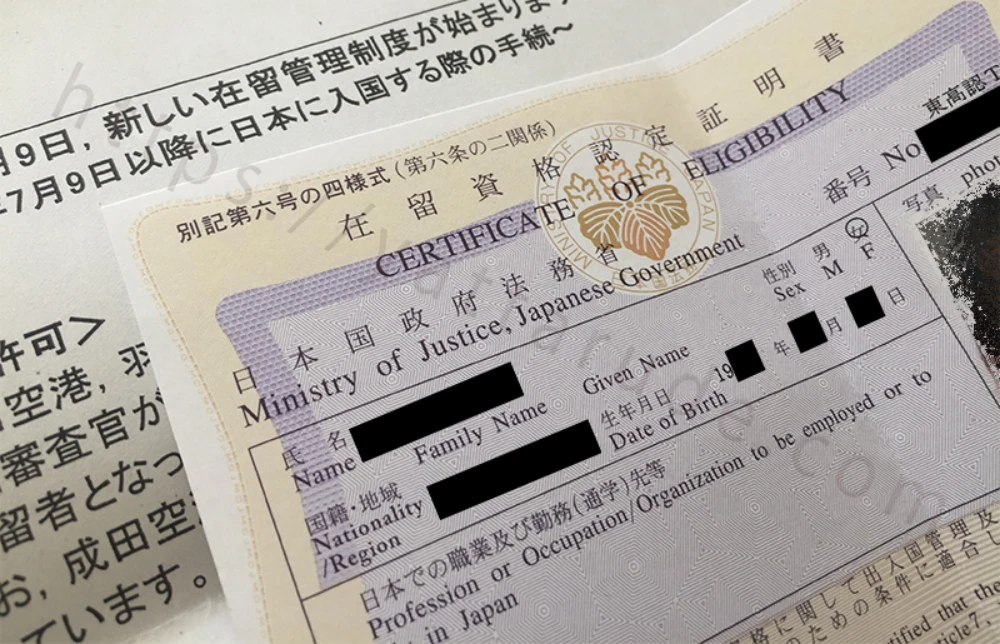
The Certificate of Eligibility (COE) is an official document issued by the Minister of Justice to confirm in advance that a foreign national is qualified to receive a residence status in Japan.
With this certificate, a spouse living abroad can apply for and smoothly obtain a visa at a Japanese embassy or consulate.
Key Points
- Role: Serves as a “pre-screening” before entry into Japan
- Effect: Once issued, the following visa issuance process is generally a formality
- Applicant: The Japanese spouse or the foreign spouse already residing in Japan applies on behalf of the applicant abroad
- Submission Office: Regional Immigration Bureau with jurisdiction over the Japanese spouse’s residence
- Validity: Three months from the date of issuance (visa application at the embassy/consulate must be completed within this period)
Basic Application Flow and Timeline

Obtaining a COE requires several steps and time. Understanding the process allows you to plan with enough margin.
| Step | Content | Typical Duration |
|---|---|---|
| 1. Document preparation | Collect documents, arrange translations, prepare supporting materials | 2–4 weeks |
| 2. Submission to Immigration | Application filed by the Japanese spouse or legal representative | Same day |
| 3. Examination | Document review, possible additional inquiries | 1–3 months |
| 4. COE issuance | Delivered by mail or at the counter | After screening |
| 5. Visa issuance at embassy/consulate | Submit COE abroad | ~1 week |
| 6. Entry to Japan & Residence Card | Residence card issued upon entry | At entry |
※ As a rule of thumb, expect 3–4 months from application to entry into Japan.
Typical Reasons for Denial

There is no single reason for denial. In most cases, a combination of the following factors is involved:
| Category | Content | Examples |
|---|---|---|
| Lack of genuine marriage | Suspicion of “marriage of convenience” or rushed marriage | Quick marriage with little dating history |
| Insufficient financial stability | Concerns about ability to sustain life in Japan | Low or unstable income, unemployed |
| Document errors or contradictions | Missing documents or inconsistencies | Marriage date differs between family register and residence record |
| Problems in immigration history | Past violations or overstays | Illegal work during short-term stay |
| Doubts about cohabitation | Question whether the couple will actually live together | Long-term separate residences due to overseas work |
Practical Measures to Avoid Denial

Simply submitting the required documents is not enough. Immigration authorities judge applications holistically, so each potential risk must be supplemented with convincing evidence.
1. Prove the genuineness of your marriage
- Prepare a written statement explaining how you met and married
- Organize chat logs, travel records, and photos
- Include evidence of family interactions (visits, photos with relatives)
2. Demonstrate stable financial ability
- Submit tax certificates and income tax payment records
- Provide bank statements or savings certificates
- If planning dual income, explain the foreign spouse’s work history and qualifications
3. Eliminate discrepancies in documents
- Cross-check the family register, marriage certificate, and residence record
- Ensure foreign documents are translated and notarized correctly
- Pay attention to issue dates and expiration periods
4. Explain past immigration history
- If there were violations, provide a statement of reflection and improvement
- Clearly explain the purpose of previous short-term stays
- Transparency builds credibility
5. Present a concrete cohabitation plan
- Submit lease agreements or proof of planned housing in Japan
- Provide a written plan covering income, workplace, and household expenses
- Demonstrate a clear, long-term plan for living together
Points of Caution Depending on the Case

Not all Spouse Visa applications are judged the same. Screening points differ depending on the type of spouse or family situation. Additional documents may be required in special cases.
- Japanese spouse: Generally more flexible, but very low income requires strong supplementary evidence
- Permanent resident / Work visa holder: Financial and employment stability is scrutinized more strictly
- Overseas or religious marriage: A Japanese “Certificate of Acceptance of Marriage” is required
- Children applying together: Birth certificates and documents proving parent-child relationships are mandatory
What to Do if Denied: Re-Application Points

A denial does not necessarily mean the end. If you identify and improve the shortcomings, approval may still be possible. Re-applying with the same content, however, will not succeed. Strategic improvements are required.
- Request an official explanation of denial reasons from immigration
- Add missing documents and supplementary explanations
- Provide more detailed written statements and plans
- Seek pre-application review from an immigration lawyer or certified specialist
Common Misunderstandings and FAQs

Many applicants share similar concerns and misconceptions about Spouse Visa COE applications. Below are some common questions and clarifications.
- Q1: Will unstable income always result in denial?
-
Not necessarily. Even with an annual income of around 3 million yen, approval may be possible if strong supplementary evidence is provided.
- Q2: Is a short dating period always a disadvantage?
-
No. But the relationship history must be explained in detail to avoid suspicion.
- Q3: Can the foreign spouse apply directly from abroad?
-
No. The Japanese spouse or their legal representative must apply at the Immigration Bureau in Japan.
When to Consult a Specialist

Some cases can be handled by the couple themselves, but in situations with higher risk, professional support is strongly recommended. Specialists can minimize denial risk by tailoring strategies to the individual case.
- Very short relationship history before marriage
- Past immigration violations or overstays
- Income close to the minimum standard or unstable employment
- Complex cases such as overseas marriage, remarriage, or children involved
Conclusion: Immigration Authorities Judge on a “Holistic Basis”

The screening of Spouse Visa COEs is based on both genuineness of the marriage and stability of living conditions.
Even if there is a weakness in one area, it can be offset by strengthening other evidence.
For those unsure of “how much is enough,” it is often best to consult with an experienced professional who can identify the risks in advance and prepare the strongest possible application.
Ishinagi Administrative Scrivener Office
“If you would like to obtain a spouse visa quickly and reliably, or if you feel uncertain about renewal or changing your residence status, please feel free to consult with our office in Yodogawa-ku, Osaka. We provide support for clients from all over Japan, making use of our experience in dealing with the Immigration Bureau.
If you wish to proceed with your spouse visa application smoothly and with confidence, please do not hesitate to contact us.
▶ Click here to see our fee schedule”
“▶ See our office’s fee schedule here”

Related Articles
▶︎ Thinking about applying for Naturalization in Osaka?|Ishinagi Administrative Scrivener Office

▶︎ Thinking about applying for Permanent Residency in Osaka?|Ishinagi Administrative Scrivener Office

▶︎ Thinking about applying for a Spouse Visa in Osaka?|Ishinagi Administrative Scrivener Office


Please contact us using the inquiry form below.
If you are in a hurry, feel free to call us at
06-7777-3467
(9:00 AM – 11:00 PM, Monday to Friday)
Please note that we may be unable to answer immediately if we are assisting other clients.
In that case, kindly leave a voicemail, and we will call you back as soon as possible.
About Our Privacy Policy
To learn about the privacy policy of “Ishinagi Administrative Scrivener Office,”
please refer to the link below:

Representative Administrative Scrivener: Takanori Ishinagi
Japan Federation of Certified Administrative Procedures Legal Specialists (Registration No.: 24260930)
Osaka Administrative Scrivener Association (Membership No.: 008905)
Certified Immigration Agent (Notification No.: Gyō-172025200093)
Neo Heights Shin-Yodogawa Room 406,
1-20-18 Jūsōhigashi, Yodogawa-ku, Osaka 532-0023, Japan
Feel free to contact us.
We will respond politely and clearly.
Business Hours: 9:00 AM – 11:00 PM (Monday to Friday)
Closed: Saturdays, Sundays, and national holidays
※ Email and LINE inquiries are accepted 365 days a year.
コメント